IT Band Syndrome: Causes, Treatment and Recovery Time

IT Band Syndrome: Causes, Treatment and Recovery Time
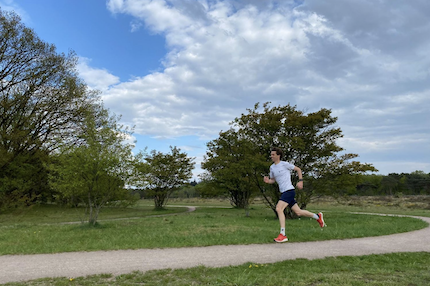
Pain on the outside of your knee when running, often after a set distance and worse when running downhill? Then you probably have IT band syndrome (ITBS), also known as iliotibial band friction syndrome (in Dutch: lopersknie). It is one of the most common running injuries, but cyclists and walkers can get it too. In this blog you will read how IT band syndrome develops, how to recognise it, what you can do yourself, how long recovery takes and when it is wise to see a physiotherapist.
What is IT band syndrome (iliotibial band friction syndrome)?
The iliotibial band (IT band) is a broad, strong band of connective tissue that runs from your hip along the outside of your thigh to just below your knee. Just above the knee joint, the band passes over a bony bump on your thigh bone. Between the band and the bone lies a bursa (a small fluid-filled sac) with some fatty tissue, which acts as a kind of shock absorber.
In IT band syndrome, this area becomes irritated by repeated friction between the band and the bursa. Your knee bends and straightens with every step. At a knee angle of around 30 degrees, roughly the moment your foot hits the ground, the band presses hardest against this area. After thousands of repetitions in a single training session, the bursa can become irritated and sensitive. Researchers are still debating the exact explanation: is it mainly friction, or also pressure on the sensitive fatty and connective tissue beneath the band? For the treatment it makes little difference. It is always about repeated irritation on the outside of your knee caused by more load than the tissue can handle.
Causes and risk factors
IT band syndrome rarely has a single cause. Usually the load has become greater than the tissue can handle at that moment. Common factors include:
Building up too quickly: more kilometres, more speed or more hills in a short time.
Running downhill and on hilly routes: the load on the outside of the knee is often greater.
Sloping surfaces: for example, always running on the same side of a cambered road, or always in the same direction on a track.
Less strength in the hips and glutes: when these muscles are tired or weak, your pelvis can drop during landing and your leg can rotate inwards.
Running technique: the way your pelvis and thigh move during landing.
For cyclists: a saddle that is too low or an unfavourable cleat position.
Too little recovery or previous complaints: tired muscles absorb less load.
Symptoms: how do you recognise IT band syndrome?
You recognise IT band syndrome by pain or a stabbing sensation on the outside of the knee, sometimes radiating to the thigh or hip. The pain often starts after a set time or distance and sometimes forces you to stop. When you rest or walk on flat ground, the pain quickly eases, whereas running downhill or going down stairs tends to make it worse.
There is often also a tender spot on the bony bump on the outside of the knee, sometimes with slight swelling. Your knee does not feel unstable and does not lock. That does not fit with IT band syndrome.
When should you see your GP or a physiotherapist?
Not every pain on the outside of the knee is IT band syndrome. A meniscus injury, an injury to the outer knee ligament or a tendon problem can feel similar. In the Netherlands you can go directly to a physiotherapist, without a referral. Definitely make an appointment if your knee swells up or stays swollen, if your knee locks, catches or gives way, or if you also have pain at rest or at night. The same applies if the complaints started after a fall or a twisting
movement, if redness, warmth or a fever occurs, or if the complaints have not improved after two weeks despite reducing your load.
What can you do yourself about IT band syndrome?
The aim is to let the irritation settle while you stay active. Complete rest is usually not necessary, but carrying on exactly as before does not work either.
1. Adjust your load. Reduce distance, pace and hills until the pain stays within your pain limit. A rule of thumb is that the pain while running should not exceed 3 to 4 out of 10, and should not be worse the next morning. If that is not possible, alternate running and walking, or take a break for a while.
2. Avoid the triggers. Temporarily leave out downhill running, sloping surfaces and increases in pace.
3. Stay fit in another way. Swimming (front crawl), aqua jogging, rowing on a rowing machine or strength training are usually fine. Cycling can trigger symptoms in some people, so test it carefully.
4. Start with strength for hips and glutes. Think of side-lying leg raises, a bridge on two legs or one leg, and sideways walking with a resistance band. Do this about three times a week. The exercises may feel tiring, but the pain on the outside of your knee should not get worse.
5. Ice, foam rolling and stretching. Ice or foam rolling can relieve the pain temporarily, but there is no proven effect on recovery itself. The IT band is also a very stiff structure that you can hardly stretch. Strengthening your hip and glute muscles is therefore more useful than stretching the band.
How can physiotherapy help with IT band syndrome?
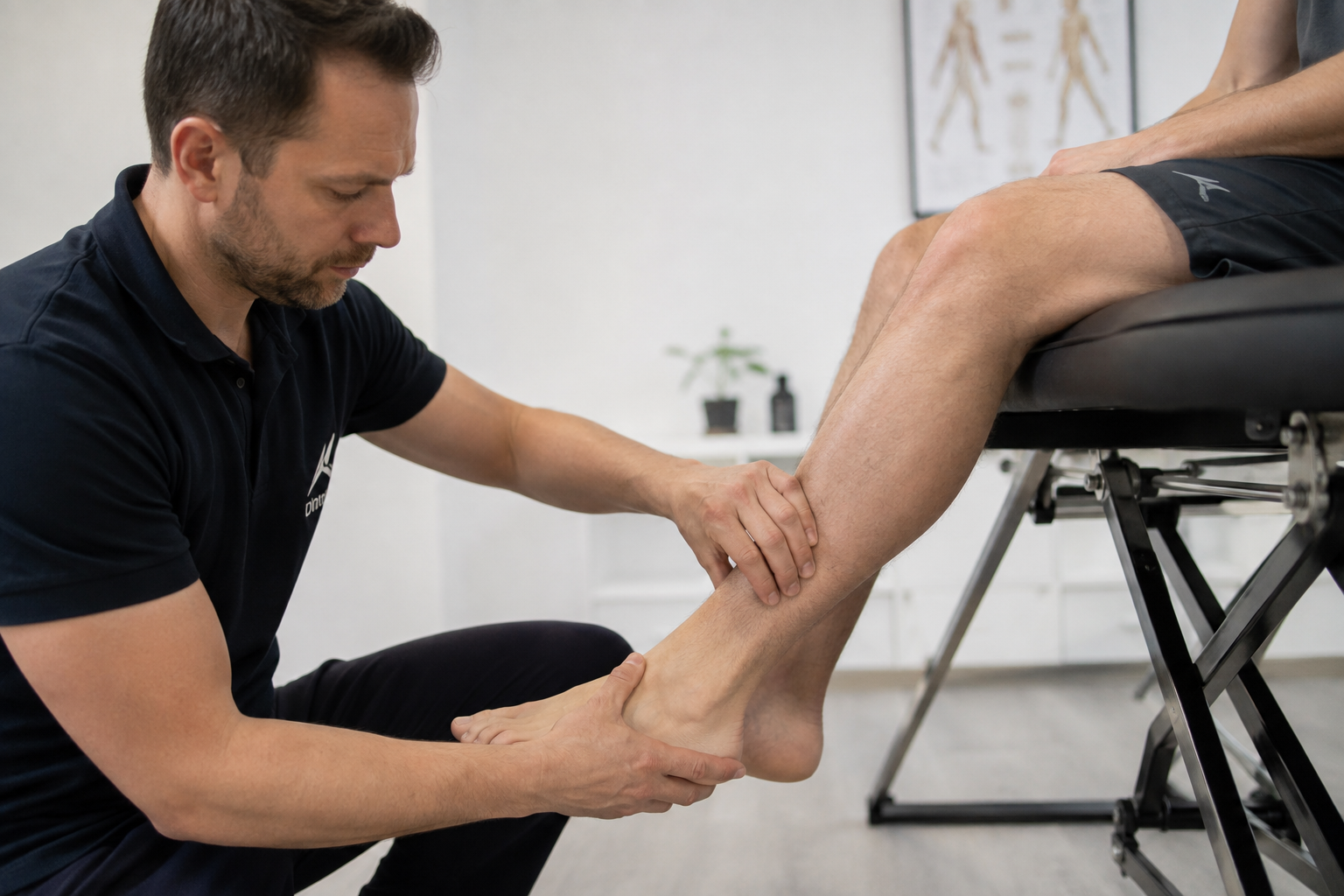
At USC Fysiotherapie in Amsterdam Oost, we do not just look at your knee, but also at how you run, train and recover. We start with a proper diagnosis, because pain on the outside of the knee does not always have the same cause. Then we work on:
Explanation and training advice: how to adjust your load so that you do not have to stop completely, while the irritation still eases.
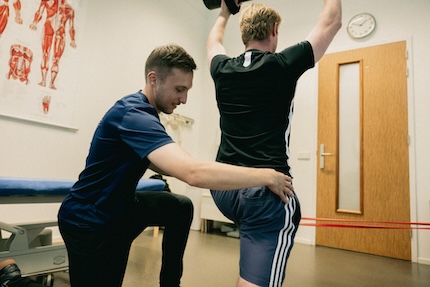
Strength training for hips, glutes and thighs: built up step by step in our fitness areas and exercise rooms.
Running analysis with Runeasi: we look at your running technique and see whether small adjustments can reduce the load on the outside of your knee.
Ultrasound (if needed): if there is doubt about the diagnosis, an ultrasound scan can give extra insight into the tissue on the outside of the knee.
Step-by-step return to running: with a final test in which we objectively check whether you are ready for sport.
For persistent complaints, we can discuss further options together with your GP or sports physician.
How long does recovery take?
That differs from person to person. With early complaints you often notice improvement within a few weeks if you adjust your load and start strengthening. Complaints that have been present for longer can take several months. The longer you keep running through pain, the longer it usually takes. Relapses are common if you go back to your old level too quickly.
When can you start running again?
You can start building up again when you can walk and go down stairs without pain, when you can do a step-down or single-leg squat without pain and without your knee collapsing inwards, and when you have enough strength in your hip and thigh, comparable to your other leg. Then build up gradually with a run-walk programme, start on a flat surface for a short time, and save hills and speed work for later. You can read more about building up in our blog Running schedule after an injury.
How do you prevent IT band syndrome?
You reduce the risk of IT band syndrome by building up your training gradually. The 10% rule is a handy rule of thumb, but it does not suit everyone equally. In addition, strengthen your hip and glute muscles at least twice a week and vary the surface and running direction, especially on a cambered road or track. If you often suffer from injuries, have your running technique analysed. Finally, take recovery seriously and adjust your training at the first signs of pain.
Frequently asked questions
Can I run with IT band syndrome?
If the pain stays within your pain limit and is not worse the next day, often yes, in a reduced form. If the pain increases while running, stop. Running through pain keeps the irritation going.
Does foam rolling help with IT band syndrome?
Foam rolling can relieve the pain temporarily, but it has not been shown to speed up recovery. Strength training and adjusting your load are more important.
Should I stretch my IT band?
Stretching the IT band is of little use, because it is a very stiff band of tissue that you can hardly stretch. Strengthening your hips and glutes works better.
Can I cycle with IT band syndrome?
That differs from person to person. For some people cycling actually triggers symptoms, because the knee is also bent at around 30 degrees during pedalling. Try it carefully with a low load and stop if the pain increases.
Is IT band syndrome the same as runner’s knee?
No. The two terms are often mixed up, but they are two different injuries. The medical names are IT band syndrome and patellofemoral pain. Both are often called "runner's knee", although in English the term most often refers to patellofemoral pain.
How long does it take to recover from IT band syndrome?
From a few weeks for early complaints to several months for longer-standing complaints, depending on how quickly you adjust your load and start strengthening.
Do you have pain on the outside of your knee when running or cycling and want to know whether it is IT band syndrome? Don’t wait too long and make an appointment at USC Fysiotherapie. With locations at Science Park, Amstelcampus and Roeterseiland in Amsterdam East, we are easily accessible. Together we make sure you can run again with confidence.
Sources: Is iliotibial band syndrome really a friction syndrome? (PubMed) and Iliotibial Band Syndrome (StatPearls)